
Report - Whatcom Catholic Property Statuses
(Please see a list of all Whatcom Catholic property holdings here.)
Introduction
In the run up to Partners in the Gospel, the Archdiocese of Seattle sent a building inspector to every church campus in Western Washington. The goal was to provide a standardized view of Archdiocesan properties, so that the future Parish Families could make informed decisions about the use and upkeep of their churches, buildings, and campuses.
Rather than include all of the detail in the full Viability Metrics report (link), we are publishing the full executive summaries here for those who are interested in a deep dive. The numbers before the church names are the church’s Archdiocesan Parish ID.
Three caveats:
This information was published in early 2024, and was ascertained in 2023 and 2024. Some of the issues mentioned may already have been addressed.
Some of this information is subjective. “End of Life”, for example, is not objectively defined and may simply be a designation for an old building, rather than a failing building.
Some of this information is known not to be accurate (e.g. St. Peter cemetery included with St. Joseph, Lynden; build date of the Ferndale rectory). We have left this information in place, so that we do not have to make judgement calls about the Archdiocesan report. We are presenting it as is.
Archdiocesan Boilerplate
This information prefaced every report.
Purpose:
The Archdiocese of Seattle developed this report and its companion documents (on a cloud-based platform) over the past year to aid new parish families in stewarding the properties under their care. This report contains information that will help parish families:
reduce costs
minimize insurance claims
review resources for effective building maintenance
aid parish families with embracing Laudato Si, Pope Francis’s directive on the environment.
initiate an assessment of parish properties for their highest and best use.
The report is a comprehensive visual assessment and working record of the parish facilities. While this snapshot offers valuable insights, it is essential to recognize its static nature; circumstances may have evolved since its creation, potentially affecting the parcel's condition and structures. As you step into your role as stewards of the built environment, this evaluation represents an initial stride.
Designed to guide pastors, consultative bodies, staff, and building professionals in their roles as custodians of the parish's physical assets, this report is a guide that highlights the current condition of the campus.
Scope:
Focused primarily on key buildings crucial to the mission of the Archdiocese of Seattle—such as churches, schools, administration buildings, and rectories—it excludes evaluations of leased properties, portable structures, sheds, or other non-significant buildings. However, structures presenting significant risks or potential catastrophic loss may receive special attention.
Approach:
The Archdiocese of Seattle engaged Bottega Group NW, a Seattle-based construction and architectural project management firm, to develop a practical tool and framework for standardizing subjective visual inspections.
A team of professionals conducted an extensive review of publicly accessible data, focusing on zoning, land use, taxable land value, and other relevant factors. These data points have been meticulously analyzed and are integrated into the findings presented in this document.
The assessment results are from visual inspections conducted by Archdiocese of Seattle staff, insurance appraisers, and industry professionals. On-site property inspections were a critical component of the safety and insurance inspection program. These inspections, insurance appraisal reports, and follow-up evaluations form the primary basis of this comprehensive assessment. Additional research efforts were undertaken to support and validate the assessment process.
While we strive for accuracy and thoroughness, it is important to acknowledge that this report may contain errors or inaccuracies. The parish family is responsible for verifying the information presented herein. This document is intended to complement, not replace, the professional assessments or industry expertise necessary for guiding asset maintenance or property disposition.
In addition to the report, there is a workbook detailing each property and building. You are strongly encouraged to use this tool, along with the criteria and supplemental information provided, to develop a comprehensive understanding of your parish family facilities. Your facility self-assessment along with the assessment provided by the Archdiocese of Seattle, will serve as invaluable tools for developing your facility plan.
Campus Map and Building Information Overview
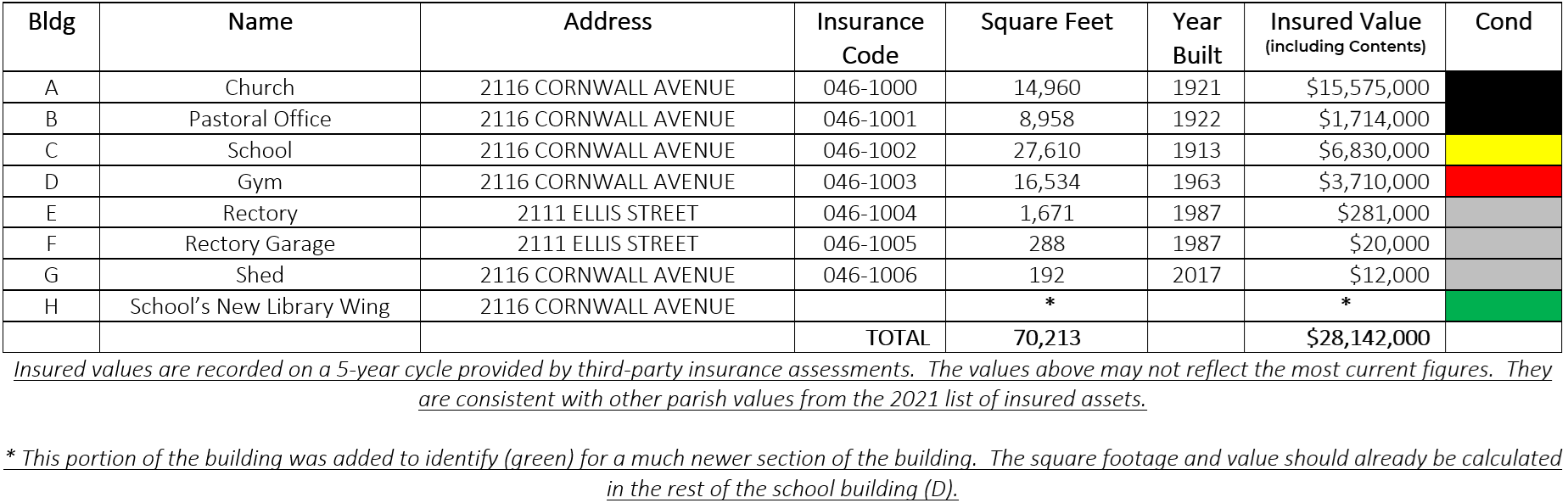
Please use the campus map on the following page(s) to locate buildings and parcels. The Archdiocese of Seattle has provided general information about the buildings in the table below. Additionally, a heat map ranks the buildings based on visual observations. Detailed evaluations are available in the SharePoint folder.
It is understood that not all buildings are suitable to support the mission of the Church for the next 100+ years, and resources are limited. Consequently, the buildings are categorized into four classifications, prioritizing investment in those that are in the best condition. The rankings are classified as follows:
This classification ensures that resources are allocated effectively, starting with the buildings that offer the best support for the Church’s long-term mission.
CLASIFICATIONS:
GREEN – Good Condition:
Buildings in this category are in satisfactory condition, have no apparent deferred maintenance, and require no immediate repair beyond routine maintenance. They comply with or exceed building codes and standards. Their structural integrity and systems, including any amenities, are well-maintained. Buildings recently renovated, or updated to contemporary standards, also fall into this category.
YELLOW – Safety and Cosmetic Repairs Recommended:
This category applies to buildings that are structurally sound and functional but need maintenance work to address minor safety concerns and enhance appearance. Recommended interventions may include non-critical system repairs, cosmetic improvements, and safety feature enhancements like improved lighting or signage. Code compliance and life safety meet the standards in place when the structure was built. However, updating the structure may require bringing it up to current standards.
RED – Critical Repairs Required:
Buildings in this category may require immediate intervention to address major issues that compromise their functionality, significant safety, or regulatory compliance. Necessary repairs may involve critical structural maintenance, essential system fixes (such as HVAC or electrical), or the mitigation of safety hazards that present immediate risks to occupants or the property. It is essential that structures in this category are reviewed by industry professionals to ensure financial viability and code compliance impacts before undertaking any project.
BLACK – Building Should be Evaluated:
This classification means that the long-term viability of the building is in question and the cost of repairing/updating these buildings may exceed their value. Structures in this category may have deteriorated to a point where repairs are likely neither feasible nor cost-effective. This may be due to severe structural damages, multiple systems that are at the end of their lifespans and challenging to repair, extensive environmental hazards, or other irreversible problems that make the building uninhabitable or unfit for its intended use. These structures should be assessed promptly by industry professionals to ensure the health and safety of parishioners.
046 - Church of the Assumption
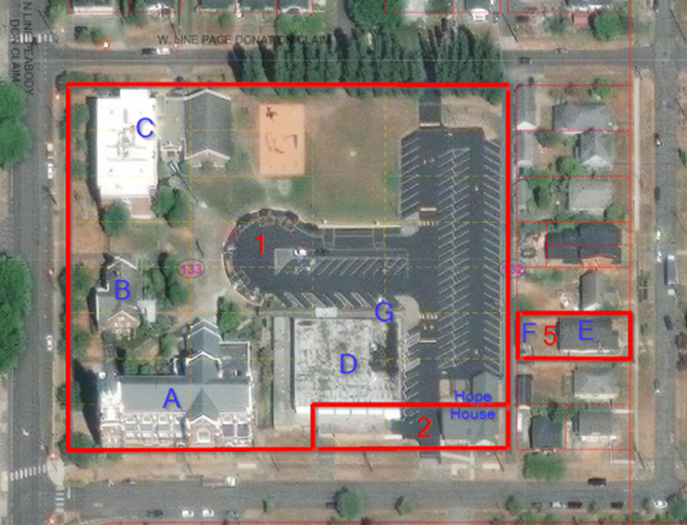
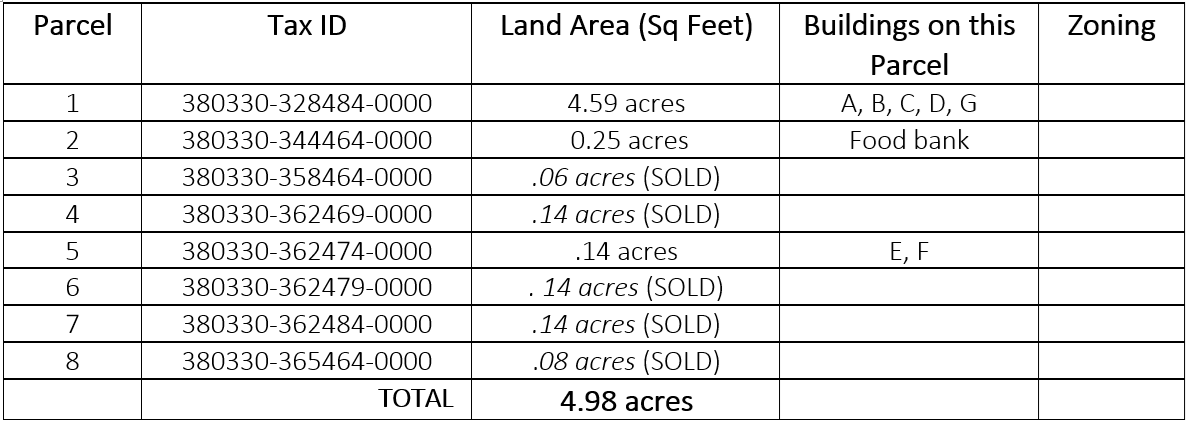
parish Parcels
Parish Buildings
Parish Facility Brief:
Strengths and Opportunities:
The church has been exceptionally well-maintained over the decades and is a standard in the Archdiocese of Seattle.
The school has had considerable updates and care.
The gym has a new roof.
The church owns the property under the food bank, but it does not come up under the parish insurance portfolio.
The church sold off several rentals.
Quality campus properties have been repaired and updated in intervals (10-15 years) allowing building issues to be addressed individually and not all at once.
Risks and Challenges:
The long bolts holding the foam on the new roof have penetrated through the ceiling by 3+ inches.
The walkways around the gym are in poor condition.
The Pastoral Center is in poor condition and discussions about its fate are going through committees.
The Rectory and Garage have conditional issues.
With old masonry buildings there are concerns related to whether they are reinforced for seismic safety.
Conclusion:
The buildings that have the most critical need for further evaluation and long-term planning are the Church, Gym and Pastoral Office. The following lists the primary reasons for the color classification given to the red and black buildings. Industry professionals will need to be engaged to accurately evaluate the state of the buildings and help develop action plans.
Church—Uneven step heights on alter, lowering alter reduced usable sq. ft, end of life systems, thermal damage to bottom side of church floor, water penetration into mech room, old bathrooms
Gym—support beams are rotting, old systems, walkways around gym are rusting/deteriorating,
Pastoral Office—water penetration, old house not intended for commercial use, old systems, failing roof, failing structural supports, single pane windows, unaddressed fire damage in attic, non-adherence to modern ADA standards
Together, our goal is to start asking the right questions and determining the highest, best use for our sites that will serve the parish community and the mission of the Catholic Church.
047 - Sacred Heart
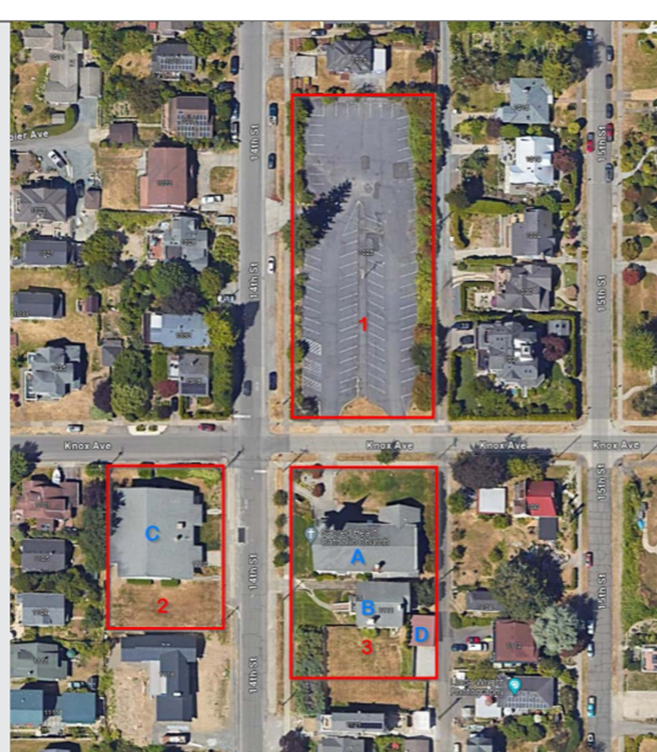
Parish Parcels

Parish Buildings

Parish Facility Brief:
Strengths and Opportunities:
The church had significant work done after a fire, and a leak was repaired on a window at the back of the church.
The front of the church looks good.
The parking lot was secured from heavy trucks and unauthorized parking.
Risks and Challenges:
The church needs some exterior work done on the buildings.
All the buildings are working with old mechanical systems and windows.
The hall deck is in disrepair.
The kitchen in the hall has experienced roof leaks and the building needs a new roof.
Please see safety report from site visit.
Conclusion:
The buildings that have the most critical need for further evaluation and long-term planning are the Church, Rectory and Hall/Admin. The following lists the primary reasons for the color classification given to the red and black buildings. Industry professionals will need to be engaged to accurately evaluate the state of the buildings and help develop action plans.
Rectory- Exterior cladding issues, old systems, building is end of life
Hall/Admin- Old systems, unsafe deck area, issues accessing lower level
Church- Old systems, water penetration, poor siding condition, foundation issues
Together, our goal is to start asking the right questions and determining the highest, best us for our sites that will serve the parish community and the mission of the Catholic Church.
072 - St. Joseph (Ferndale)
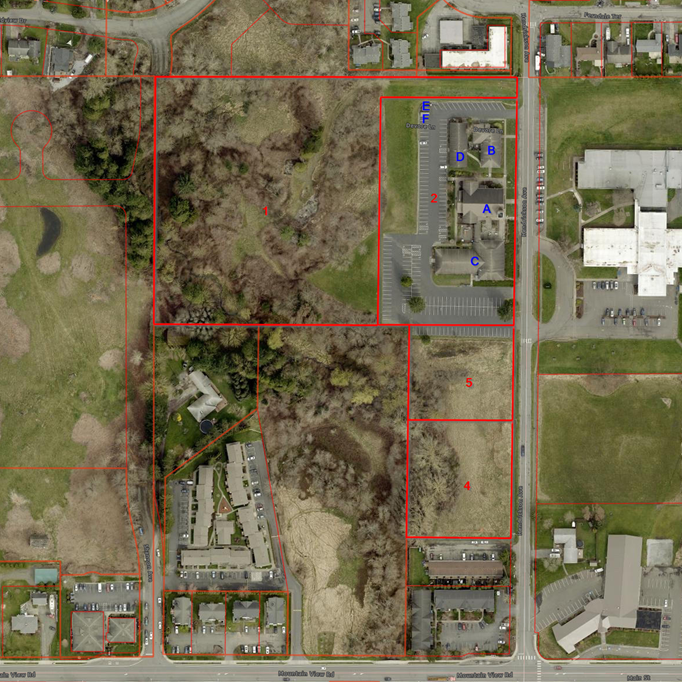
Parish Parcels
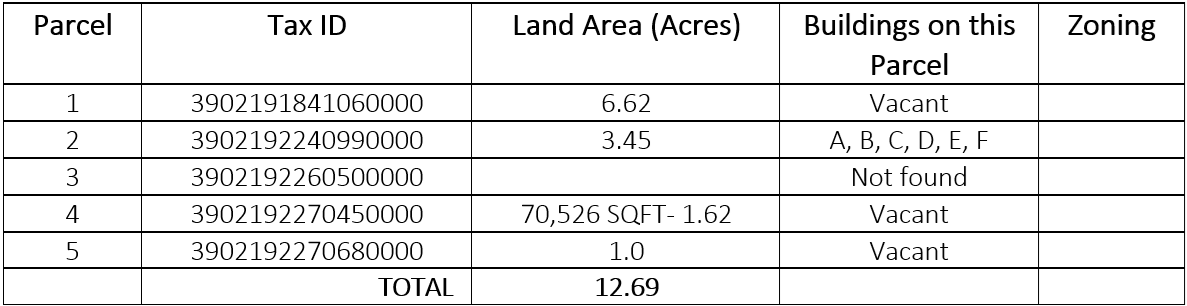
Parish Buildings
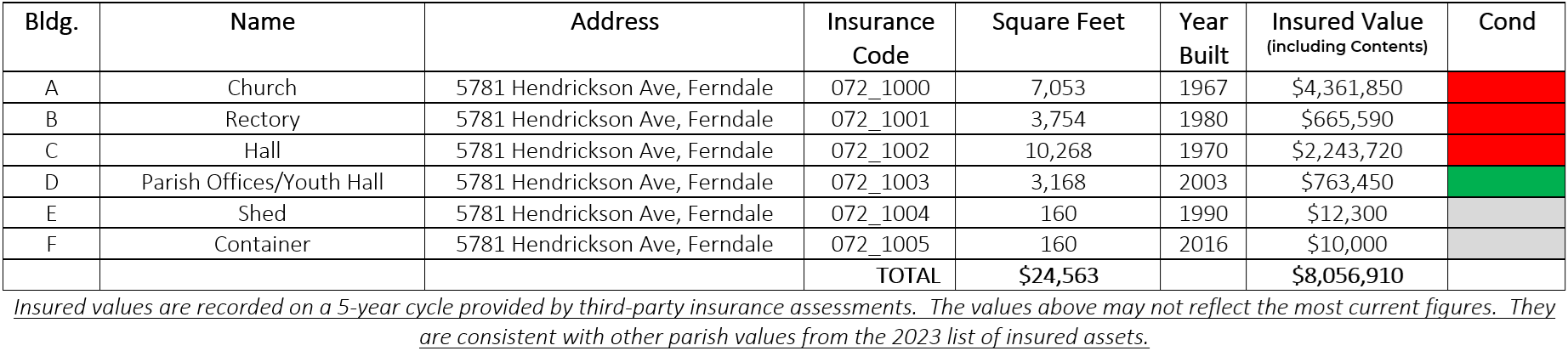
Parish Facility Brief:
Strengths and Opportunities:
The property is large and sufficient to accommodate any needed growth.
All buildings but the church have wider than typical overhangs that protect the building, which reduces maintenance and prolongs the life of paint and windows.
Not being overplanted around the building keeps the line of site clear in providing visual security.
Risks and Challenges:
The property is not fenced or gated and has experienced theft and trespassing.
Being similar in age, many aspects of buildings will need to be replaced simultaneously, this means there may need to be proactive/scheduled maintenance.
The rectory is on the church property which can limit the priest’s privacy during his time off.
The parish is a fairly rural location, and some distance from the freeway or traditional municipalities, which could make it less convenient for those traveling from adjacent communities.
Conclusion:
The buildings that have the most critical need for further evaluation and long-term planning are the Church, Rectory, and Hall. The following lists the primary reasons for the color classification given to the red and black buildings. Industry professionals will need to be engaged to accurately evaluate the state of the buildings and help develop action plans.
Church-Building systems are end of life
Rectory- Building systems are end of life
Hall- Building systems are end of life, water penetration, substandard electrical
Together, our goal is to start asking the right questions and determining the highest, best us for our sites that will serve the parish community and the mission of the Catholic Church.
073 - St. Anne
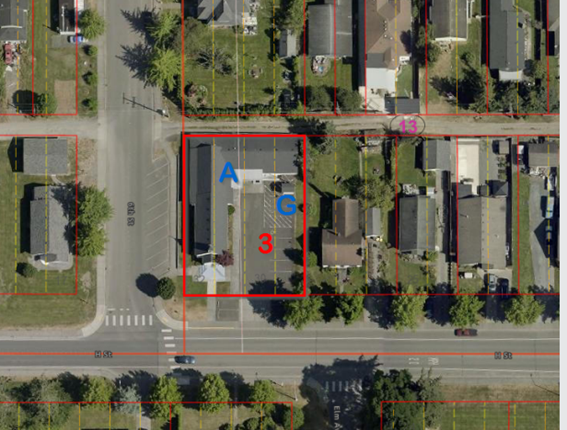
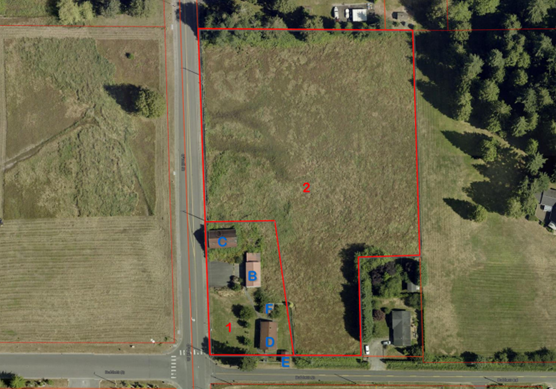
Parish Parcels
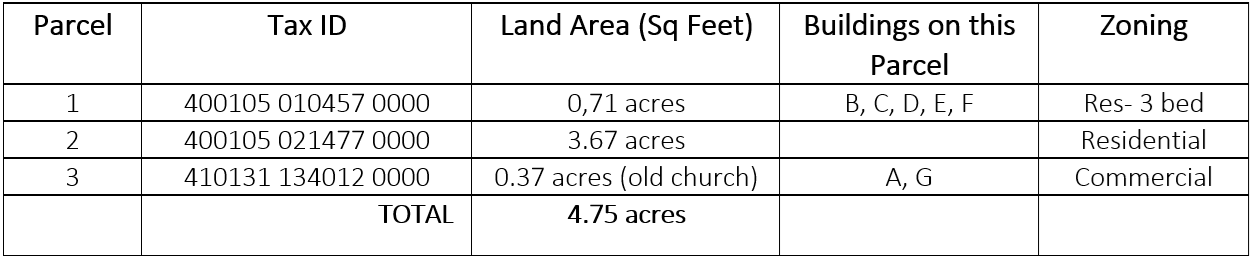
Parish Buildings
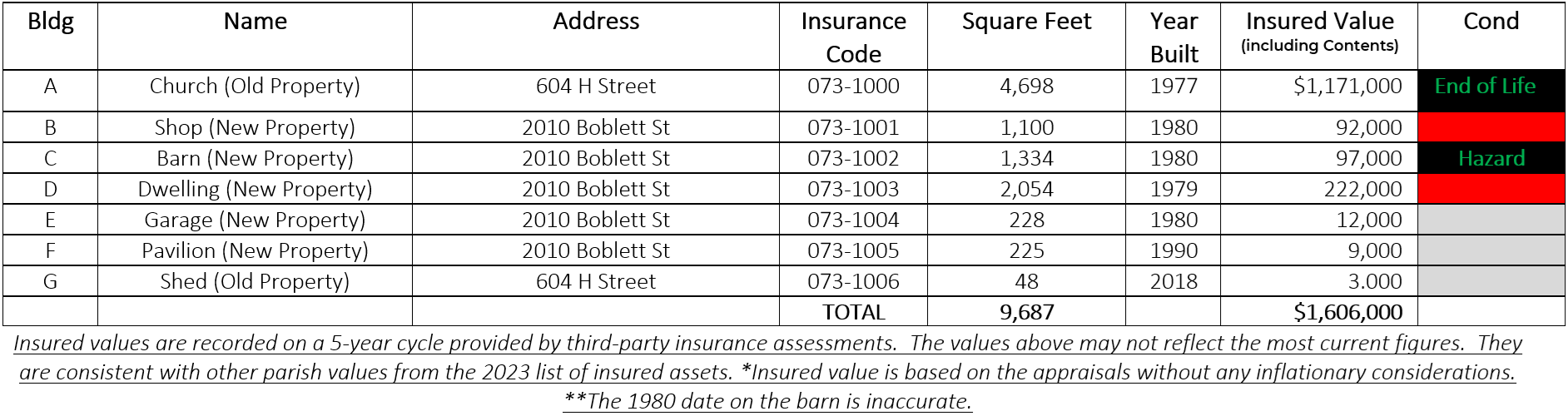
Note: The green lettering on black indicates that the church is being proactive and recognizes that the buildings are at the END OF LIFE.
Parish Facility Brief:
Strengths and Opportunities:
The parish has acted on the understanding that the old church is not able to serve the long-term needs of the community.
The hazard of the barn is recognized by the church, but the cost of removal is problematic.
Risks and Challenges:
The old barn on the new property is dangerous because of its structural integrity, it is an attractive nuisance, and people are occupying the space. Please contact the insurance group at the Archdiocese of Seattle for assistance with this process.
The shop is in poor condition and, while it may serve temporary storage needs, it will not serve long-term needs so any investment should be carefully considered.
Conclusion:
The buildings that have the most critical need for further evaluation and long-term planning are the Church, Shop, Barn, and Dwelling. The following lists the primary reasons for the color classification given to the red and black buildings. Industry professionals will need to be engaged to accurately evaluate the state of the buildings and help develop action plans.
Church (Stevenson) – End of life, old systems
Shop – Single pane windows, broken concrete, poor condition
Barn – Safety hazard, needs to be demolished
Dwelling – Old building, end of life
Together, our goal is to start asking the right questions and determining the highest, best use for our sites that will serve the parish community and the mission of the Catholic Church.
088 - St. Joseph (Lynden)
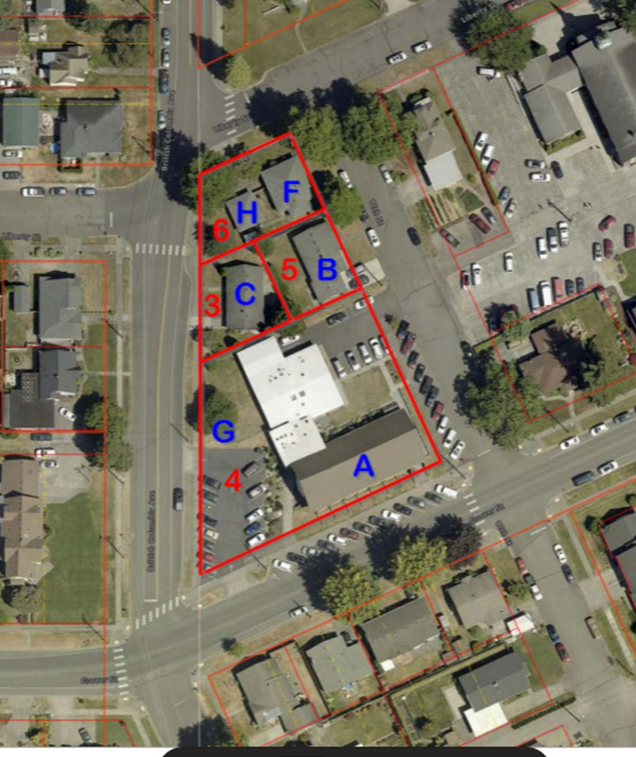
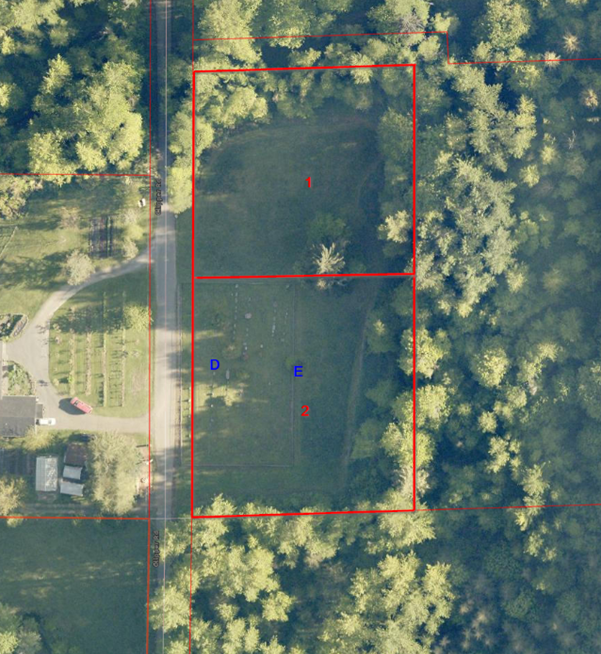
Parish Parcels
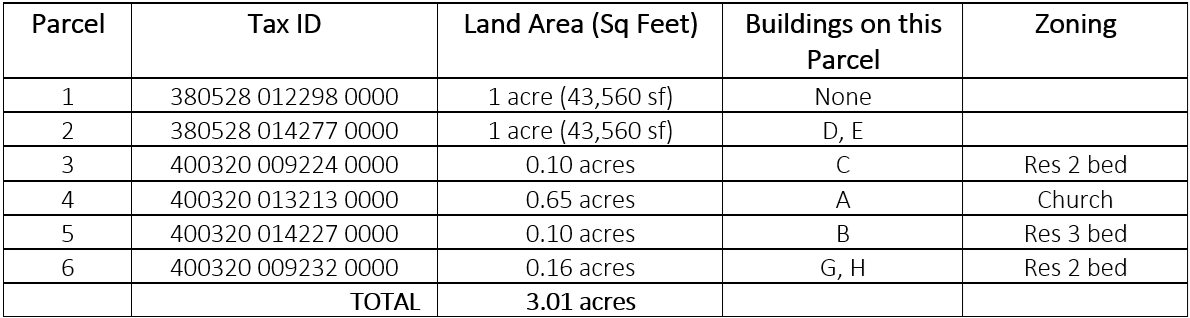
Parish Buildings
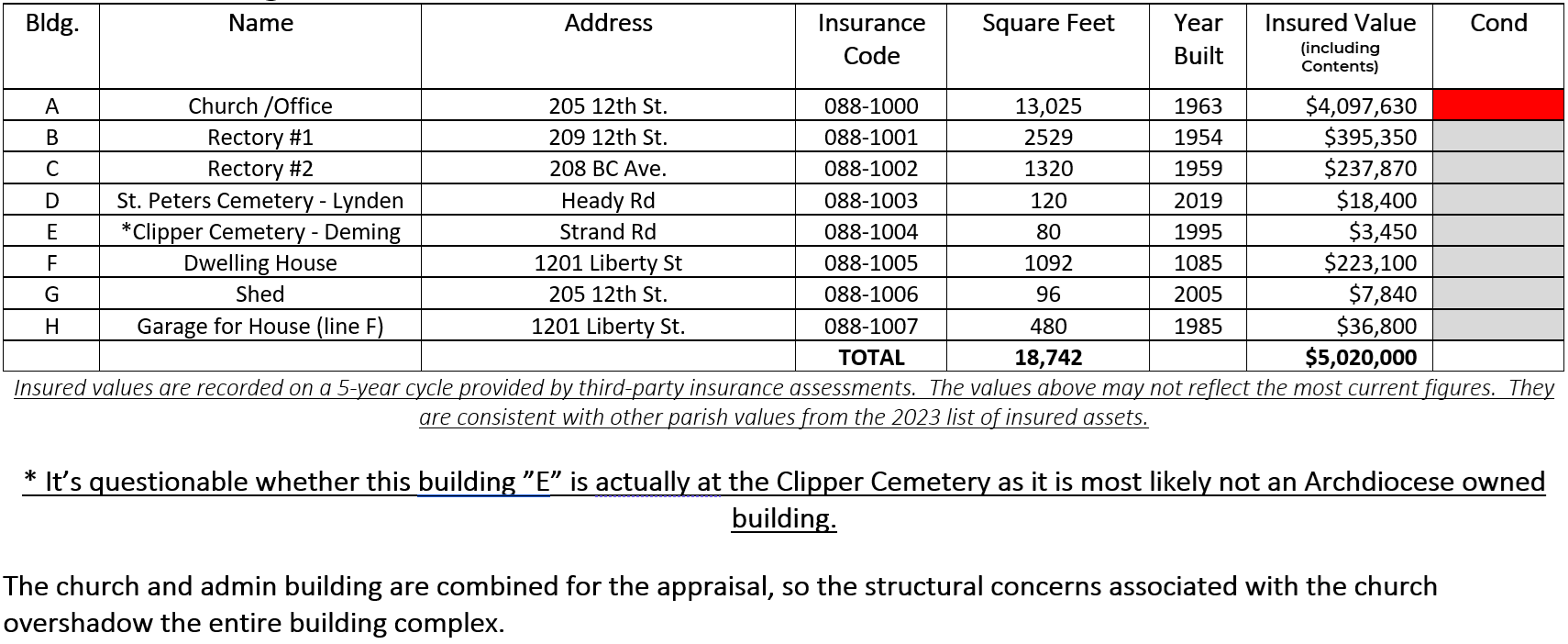
Parish Facility Brief:
Strengths and Opportunities:
The church owns the entire triangular city block.
There is a sense of order to the care and operation of the property.
The St. Peter Cemetery is well cared for.
Risks and Challenges:
The block is too small to build a large church.
This is a hostile community to Catholics.
The Clipper Cemetery is not easily accessible.
The church has issues with the roof supports rotting and the deterioration of the stonework.
The rectory by the parking lot of the admin building is in poor condition.
Conclusion:
The building that has the most critical need for further evaluation and long-term planning is the Church/office. The following lists the primary reasons for the color classification given to the red and black buildings. Industry professionals will need to be engaged to accurately evaluate the state of the buildings and help develop action plans.
Church/Office—Building is end of life, few significant physical improvements have been made to the building.
Together, our goal is to start asking the right questions and determining the highest, best us for our sites that will serve the parish community and the mission of the Catholic Church.
089 - St. Peter
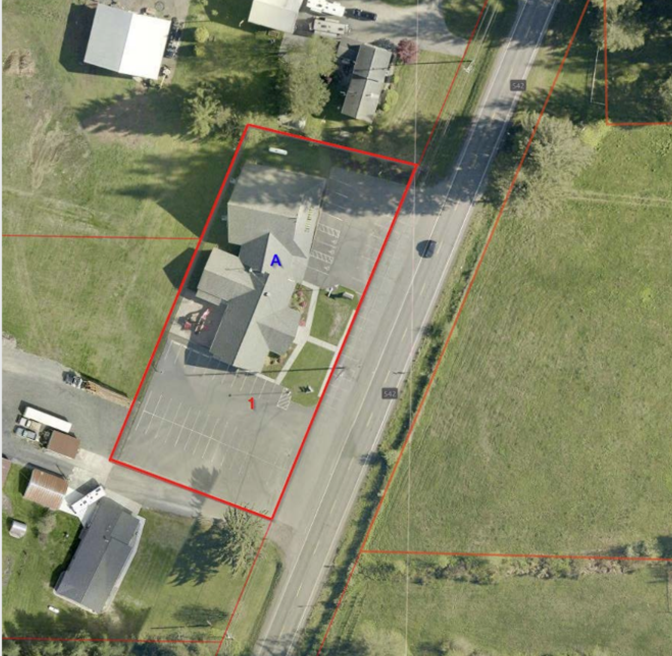
Parish Parcels
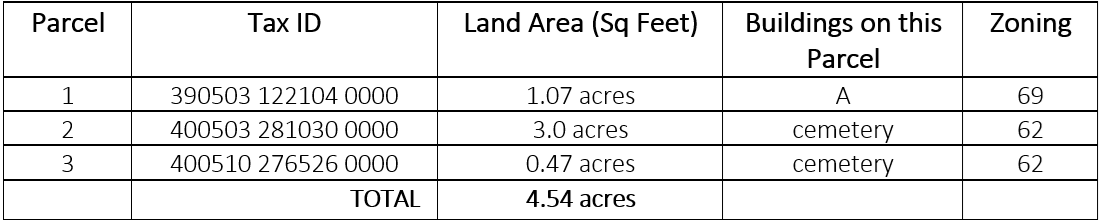
Parish Buildings

Parish Facility Brief:
Strengths and Opportunities:
The church, hall, and food bank are combined into a single building that was undergoing a front façade replacement during the time of inspection. The lawn was also being replaced at that time.
The playground at the back of the church is secured, with both the playset and fencing in near-new condition.
Risks and Challenges:
People leave the facility directly onto the highway, which is a safety concern.
The building is aging and would benefit from a long-term building plan.
Conclusion:
None of the buildings on St. Peter Deming’s campus have a critical need for further evaluation. As your Parish Family moves toward creating a One Parish Plan, industry professionals will need to be engaged to accurately evaluate the state of the buildings and help develop action plans.
Together, our goal is to start asking the right questions and determining the highest, best us for our sites that will serve the parish community and the mission of the Catholic Church.
Not Evaluated
St. Joachim
Not evaluated. Reason unknown. Information from Whatcom County can be found at: https://property.whatcomcounty.us/propertyaccess/Property.aspx?cid=0&year=2023&prop_id=43779
Viking Catholic
Not evaluated. Reason unknown. Information from Whatcom County can be found at:
Main Building: https://property.whatcomcounty.us/propertyaccess/Property.aspx?cid=0&year=2023&prop_id=76767
Back Apartments: https://property.whatcomcounty.us/propertyaccess/Property.aspx?cid=0&year=2023&prop_id=76766
Mercy House: https://property.whatcomcounty.us/propertyaccess/Property.aspx?cid=0&year=2023&prop_id=76761
St. Anne Cemetery
Not evaluated. Archdiocese did not mention it in any report, and so may not realize that we own it. Information from Whatcom County can be found at: https://property.whatcomcounty.us/propertyaccess/Property.aspx?cid=0&year=2023&prop_id=136766
Sad state of disrepair can be viewed at: https://youtu.be/HnonvTMVPw4?si=oBNn3gT3bbG2GchU